
Showing posts with label coptic. Show all posts
Showing posts with label coptic. Show all posts
Saturday, 8 January 2011
0
Saturday, 8 January 2011
Fouad GM

Sameh Samir offers an alternative explanation for rising sectarian conflict in Egypt. The Egyptian state, represented by the archetypical policeman (mustache, attire, rank and helmet), uses religion to scare Muslims of Copts and Copts of Muslims.
Read more...
Caricature offers an alternative explanation for sectarianism in Egypt

Sameh Samir offers an alternative explanation for rising sectarian conflict in Egypt. The Egyptian state, represented by the archetypical policeman (mustache, attire, rank and helmet), uses religion to scare Muslims of Copts and Copts of Muslims.
Friday, 7 January 2011
0
Friday, 7 January 2011
Fouad GM
Read more...
محمد منير : رسالة صوفية ردًا على الإرهاب
رغم اصراري ان الوقت ليس وقت "مسح گوخ" و لا "تبويس لحى" و رغم اصراري ان الحل ليس دينيا على الإطلاق و اقتناعي التام ان المشكلة مشكلة تحلل المجتمع المصري و استبداد مؤسساتي و ان الحل يجب ان يتضمن مواجهة عنيفة و جذرية لهذه الاخفاقات الهيكلية ... بس بصراحة الأغنية ديه فعلًا معبرة عن شعوري
غناها الأسطورة محمد منير و هوابن النيل و النوبه و ناسها الطيبيين المظلومين المهمشين المنسيين اللي محدَش بيتضامن مع حقوقهم المدنية او الثقاقية او الاقتصادية . غناها منذ عقد ردًا على احداث 11 أيلول/سبتمبر و ركز فيها على عدد من الرسائل اللي هي لب القضية في رأيي ... و طعّم هذه المقاطع المليئة بالمعاني باستنجاد جميل و لجوء و خشوع متواضعين للحبيب محمد طالبا منه المدد و لعون -- طبعًا للأخوة اللى حرموا شعار الهلال و الصليب و ادانوا مبادرات التضامن مع اقباط مصر اثر هجوم رأس السنة الارهابي فطبعًا طلب المدد من رسول الله كفر و التواضع مع جنابه الأعظم شرك -- و لا حول ولا قوة الا بالله
الأغنية جزء من البوم منير الصوفي الوحيد و هو الأول الذي غناه الأسطورة المصرية بعد عودته من حج بيت الله الحرام
ملخص الأنشودة
العدل في الميزان لكل خلق الله
الدم كله سواء ... حرام بأمر الله
الحرية ... على الأرض السلام و بالناس المسرّة
Thursday, 6 January 2011
3
Thursday, 6 January 2011
Fouad GM
Some Ramblings : Post-Alexandria Reflections
I didn't realise this was going to be so long when I first started to reflect -- so, grab a coffee, light a cigarette or pour yourself a pint and come chill to some of my ramblings and reflections on the terrorist attach on the Alexandrian Coptic Church and the debates that followed.
********************************
Understandably, the Alexandria terrorist attack has triggered immense debate amongst the more vocal and technologically-savvy in Egypt and within the diaspora. Like their compatriots, Egyptian Facebookers, bloggers, youtubers and tweeters have struggled to come to terms with the event and its reprecussions.
Many descended into an aggressive wave of sectarian conflict: accusations, excommunication and even exchanging threats -- as 'alien' as this sounds to Egyptian idealists and denialists, this is not unlike Egyptians. Egyptian schoolchildren, a friend reported on his FB status yesterday, marched around their neighbourhood chanting anti-Coptic slogans, supposedly, 'in response' to Copts' protests in which they vowed to 'avenge' the dead, threatened to 'slay' Muslims and 'redeem the Cross.'
Copts and Muslims in Egypt reacted rather similarly when Al-Qaida attacked Our Lady of Salvation in Baghdad and considered it a threat to the Coptic Church in Egypt -- Copts even declared the establishment of a "Coptic Al-Qaeda" to retaliate against any possible attack against theit church!
Let's not go too far: days before the terrorist attack, I was invited to a family friend's Christmas dinner party in Sheffield -- the hosts were Egyptian Muslim and so were most of the guests. Nevertheless, socialisation and political debates after dinner turned into a row between Christians and Muslims who disagreed on the role of religion in society and argued as to whether or not Egypt was an 'Islamic country'. They were all -holders, mostly MDs, all over 50 years of age, not young, not radical and certainly not poor or ill-educated! The others' reaction? Calm them down, separate them and close the topic . Typical : دع الفتنة نائمة and pretend all is good. Instead of dealing with the situation and allowing the debate to continue, a policy of Sad El-Hanak was applied and Om Ali and tea were served for dessert!
In another Egyptians-in-England Christmas dinner, I overheard a few whispering -- they were discussing whether or not it's Islamically-permissable to wish Christians a Merry Christmas. The conclusion: yes, it's permissable in Christmas as it marks the birth of a prophet acknowledged by Islam; but come Easter and season's greetings become haram!
Egyptians on Facebook are no different: many got bogged down in an aimless debate on whether or not it is Islamically-permisable to use the Cross on your Facebook status, in slogans condemning the attack or in visual representations of national unity .
You can call all of that 'alien to Egyptian society' all you want, but these are educated, literate, well-off and Facebook-savvy Egyptians -- they are the créme de la créme of Egyptian society, graduates of top universities, drive the fanciest cars in town, shop in Europe and send their kids to universities in America!.
Idealists and denialists (who are most certainly the more visible majority) on the other hand have overtaken Facebook employing hundreds of creative ways to externalise responsibility and throw the blame on some non-Egyptian evil. Their techniques were rather colourful: thousands of "Crescent and Cross" profile pictures; Egyptian flags; and millions of statuses and FB groups, pages and causes condemning the 'foreign' attack on 'all of Egypt', expressing outrage at the 'alien' mentality behind it, and pointing fingers towards Israel, the USA and Al-Qaida. Some even posted 'documents' that 'reveal' a secret 'Zionist' plan to divide Egypt.
Good-hearted as their intentions may be , Egyptians' idealism and denialism has been my target in recent posts and has led me to see prospects of reform and democracy with pecimism and scinicism. -- this inspired my post two days ago . An article by Wael Abdel Fattah in the Lebanese Al-Akhbar inspired a little bit of optimism in my post today.
*****************************
Nonetheless, not all is negative: some constructive debate has taken place in the wake of the heinous terrorist attack. In fact, the aforementioned post was inspired by a debate which evolved around a friend's note on Facebook.
Another interesting debate has taken place between me and a dear relative of mine. Although we come from different generational backgrounds and live thousands of miles apart, our disagreements in the past week have been expressed in utmost respect and with constructive intentions.
I have decided, after consulting with her, to respond to two of the issues which we debated publically. I shall refer to her in his blog as A.N.
Firstly, in response to my criticism of the opinion that the terrorist attack and sectarianism is ever-so 'foreign' and 'alien' -- A.N attributed my opinion to my 'young age' and that I did not live the struggle for independence in the early twentieth century, the 1952 Revolution , the Israeli invasions in 1956 and 1967 or the violent 1970s. This, according to A.N explains why I am unable to appreciate the possibility of external forces as the perpetrators of the terrorist attack
Secondly, I 'disliked' a Facebook Cause claiming that "REAL Egyptians (Christians & Muslims) love one another" which A.N was promoting -- my argument was, real Egyptian society, even real Islam and the real Coptic Church are not innocent and are not unrelated to the terrorist attack that targeted Al-Qidissain on New Year's Eve. In response, A.N asked me to define what a real, good, patriotic Egyptian is.
*****************************
Here's my response to the two points:
Firstly, as flaterring as being called 'young' may be -- I disagree that young age makes one essentially and intrinsically unable to comprehend and analyse events which he/she has not lived in person. If that was the case, we would not have medievalists and scholars of antiquity amongst us! I therefore do not hold the belief that my young age disqualifies my judgements of events or makes my opinions and views any less informed.
In a previous post a few weeks ago, I expressed some of my positions towards the classical argument that 'because you live abroad' then you essentially 'don't know enough' and cannot make an 'informed judgement'. I believe the same stands for age and time. So, if A.N's opinions count although she hasn't lived in Egypt for decades, then I don't see why mine don't even though I wasn't physically around when Israel invaded the Sinai.
No arrogance intended, but, as a social scientist and almost-PhD-holder with a particular focus on early modern sociology, al philosophy and political-economy, I believe I am qualified enough to study and understand the events of the nineteenth and twentieth centuries, perhaps even more than some of those who 'lived' these events: one might have lived an event but been kept ill-informed thanks to the limited access to information for which the Middle East is notorious! One might have lived a certain era so deep that they are genuinly unable to separate fact from the myths and conspiracy theories of the time. One might even live a certain era but be unformed of the opinions of other social classes and communities -- especially if you come from an aristocratic-turned-bourgeois family like ours, in a society as classist as Egypt!
This brings me to A.N's second point: how do I define a real, good and patriotic Egyptian.
My answer is rather simple: you cannot define a person, let alone a nation!
Egyptians are workers, professionals, thieves, beggers, poverty, gated communities, peasants, city-swellers, ba7raweya, sa3ayda, sayadeen, badw, beber/amazigh, 3arab, qebt, nubians, African blood, Arab heritage, Turkish roots, Levantine, Greek and Italian origins!
What counts is that a certain social order, social contract, social conduct and a state coordinated their living together. A social order guaranteed a degree of coherence, respect, civility, commitment, rights, duties and sanctity of life, property and honour (perhaps Ibn Khaldoun's Muqaddima might offer a good explanation).
The social contract has collapsed and the civility long-gone: it all started over a century ago -- has come to an absolute end decades ago. That's why A.N's father left Egypt; that's why she's where she is now and I'm where I am; and that's why millions of Egyptians want to follow our path -- Egypt only became an emigration country two decades ago. but, according to studies, the increase in the rate of Egyptians emigrating is higher than other sending-developing countries (excluding Iraq and Afghanistan). Egypt is currently 'exporting' more emigrants (as a percentage of population) than traditional-sending countries, India and Pakistan!
We can deny it all we want. We can pretend that the Crescent and the Cross as 'naturally' in harmony in Egypt all we want. And we can certainly point fingers to Iran, Al Qaida or Israeli-directed GPS sharks and other conspiracy theories all we want. And, actually, we might even be right -- Israel, or Al Qaida or whoever else might be beneficiaries. Hell, they might have even funded or planned the attack. But Egypt is not an innocent victim, it's a fertile ground which breeds frustrations, hatred and terrorism thanks to a precarious social order and a failed state.
Unfortunately, our theories on how 'alien' and 'foreign' sectarianism is conceals a sad reality: Egyptian society has failed to nurture a commitment to development, an aspiration for a decent living, a promise for a better future. Failed to protect human life, provide social justice and has certainly failed in creating a citizen with a stake in this land, nation and country.
If you ask me, the problem is NOT one of poverty or ignorance. The lower classes might be poor, and they certainly harbour rather conservative views on sectarian, religious and social issues, and they are quite xenophobic when it comes to 'the non-white other' in general. But the 'real' issue is the Egyptian middle class. Despite their 'education', 'culture', 'travels', 'exposure' and endless richesse, the middle class harbours endless contradictions -- from genuine, well-articulated and disguised backwardness, sectarianism and xenophobia to an admirable ability to pretend 'everything is alright'. And when everything is not alright, then it must be 'something foreign.'
Read more...
********************************
Understandably, the Alexandria terrorist attack has triggered immense debate amongst the more vocal and technologically-savvy in Egypt and within the diaspora. Like their compatriots, Egyptian Facebookers, bloggers, youtubers and tweeters have struggled to come to terms with the event and its reprecussions.
Many descended into an aggressive wave of sectarian conflict: accusations, excommunication and even exchanging threats -- as 'alien' as this sounds to Egyptian idealists and denialists, this is not unlike Egyptians. Egyptian schoolchildren, a friend reported on his FB status yesterday, marched around their neighbourhood chanting anti-Coptic slogans, supposedly, 'in response' to Copts' protests in which they vowed to 'avenge' the dead, threatened to 'slay' Muslims and 'redeem the Cross.'
Copts and Muslims in Egypt reacted rather similarly when Al-Qaida attacked Our Lady of Salvation in Baghdad and considered it a threat to the Coptic Church in Egypt -- Copts even declared the establishment of a "Coptic Al-Qaeda" to retaliate against any possible attack against theit church!
Let's not go too far: days before the terrorist attack, I was invited to a family friend's Christmas dinner party in Sheffield -- the hosts were Egyptian Muslim and so were most of the guests. Nevertheless, socialisation and political debates after dinner turned into a row between Christians and Muslims who disagreed on the role of religion in society and argued as to whether or not Egypt was an 'Islamic country'. They were all -holders, mostly MDs, all over 50 years of age, not young, not radical and certainly not poor or ill-educated! The others' reaction? Calm them down, separate them and close the topic . Typical : دع الفتنة نائمة and pretend all is good. Instead of dealing with the situation and allowing the debate to continue, a policy of Sad El-Hanak was applied and Om Ali and tea were served for dessert!
In another Egyptians-in-England Christmas dinner, I overheard a few whispering -- they were discussing whether or not it's Islamically-permissable to wish Christians a Merry Christmas. The conclusion: yes, it's permissable in Christmas as it marks the birth of a prophet acknowledged by Islam; but come Easter and season's greetings become haram!
Egyptians on Facebook are no different: many got bogged down in an aimless debate on whether or not it is Islamically-permisable to use the Cross on your Facebook status, in slogans condemning the attack or in visual representations of national unity .
You can call all of that 'alien to Egyptian society' all you want, but these are educated, literate, well-off and Facebook-savvy Egyptians -- they are the créme de la créme of Egyptian society, graduates of top universities, drive the fanciest cars in town, shop in Europe and send their kids to universities in America!.
Idealists and denialists (who are most certainly the more visible majority) on the other hand have overtaken Facebook employing hundreds of creative ways to externalise responsibility and throw the blame on some non-Egyptian evil. Their techniques were rather colourful: thousands of "Crescent and Cross" profile pictures; Egyptian flags; and millions of statuses and FB groups, pages and causes condemning the 'foreign' attack on 'all of Egypt', expressing outrage at the 'alien' mentality behind it, and pointing fingers towards Israel, the USA and Al-Qaida. Some even posted 'documents' that 'reveal' a secret 'Zionist' plan to divide Egypt.
Good-hearted as their intentions may be , Egyptians' idealism and denialism has been my target in recent posts and has led me to see prospects of reform and democracy with pecimism and scinicism. -- this inspired my post two days ago . An article by Wael Abdel Fattah in the Lebanese Al-Akhbar inspired a little bit of optimism in my post today.
*****************************
Nonetheless, not all is negative: some constructive debate has taken place in the wake of the heinous terrorist attack. In fact, the aforementioned post was inspired by a debate which evolved around a friend's note on Facebook.
Another interesting debate has taken place between me and a dear relative of mine. Although we come from different generational backgrounds and live thousands of miles apart, our disagreements in the past week have been expressed in utmost respect and with constructive intentions.
I have decided, after consulting with her, to respond to two of the issues which we debated publically. I shall refer to her in his blog as A.N.
Firstly, in response to my criticism of the opinion that the terrorist attack and sectarianism is ever-so 'foreign' and 'alien' -- A.N attributed my opinion to my 'young age' and that I did not live the struggle for independence in the early twentieth century, the 1952 Revolution , the Israeli invasions in 1956 and 1967 or the violent 1970s. This, according to A.N explains why I am unable to appreciate the possibility of external forces as the perpetrators of the terrorist attack
Secondly, I 'disliked' a Facebook Cause claiming that "REAL Egyptians (Christians & Muslims) love one another" which A.N was promoting -- my argument was, real Egyptian society, even real Islam and the real Coptic Church are not innocent and are not unrelated to the terrorist attack that targeted Al-Qidissain on New Year's Eve. In response, A.N asked me to define what a real, good, patriotic Egyptian is.
*****************************
Here's my response to the two points:
Firstly, as flaterring as being called 'young' may be -- I disagree that young age makes one essentially and intrinsically unable to comprehend and analyse events which he/she has not lived in person. If that was the case, we would not have medievalists and scholars of antiquity amongst us! I therefore do not hold the belief that my young age disqualifies my judgements of events or makes my opinions and views any less informed.
In a previous post a few weeks ago, I expressed some of my positions towards the classical argument that 'because you live abroad' then you essentially 'don't know enough' and cannot make an 'informed judgement'. I believe the same stands for age and time. So, if A.N's opinions count although she hasn't lived in Egypt for decades, then I don't see why mine don't even though I wasn't physically around when Israel invaded the Sinai.
No arrogance intended, but, as a social scientist and almost-PhD-holder with a particular focus on early modern sociology, al philosophy and political-economy, I believe I am qualified enough to study and understand the events of the nineteenth and twentieth centuries, perhaps even more than some of those who 'lived' these events: one might have lived an event but been kept ill-informed thanks to the limited access to information for which the Middle East is notorious! One might have lived a certain era so deep that they are genuinly unable to separate fact from the myths and conspiracy theories of the time. One might even live a certain era but be unformed of the opinions of other social classes and communities -- especially if you come from an aristocratic-turned-bourgeois family like ours, in a society as classist as Egypt!
This brings me to A.N's second point: how do I define a real, good and patriotic Egyptian.
My answer is rather simple: you cannot define a person, let alone a nation!
Egyptians are workers, professionals, thieves, beggers, poverty, gated communities, peasants, city-swellers, ba7raweya, sa3ayda, sayadeen, badw, beber/amazigh, 3arab, qebt, nubians, African blood, Arab heritage, Turkish roots, Levantine, Greek and Italian origins!
What counts is that a certain social order, social contract, social conduct and a state coordinated their living together. A social order guaranteed a degree of coherence, respect, civility, commitment, rights, duties and sanctity of life, property and honour (perhaps Ibn Khaldoun's Muqaddima might offer a good explanation).
The social contract has collapsed and the civility long-gone: it all started over a century ago -- has come to an absolute end decades ago. That's why A.N's father left Egypt; that's why she's where she is now and I'm where I am; and that's why millions of Egyptians want to follow our path -- Egypt only became an emigration country two decades ago. but, according to studies, the increase in the rate of Egyptians emigrating is higher than other sending-developing countries (excluding Iraq and Afghanistan). Egypt is currently 'exporting' more emigrants (as a percentage of population) than traditional-sending countries, India and Pakistan!
We can deny it all we want. We can pretend that the Crescent and the Cross as 'naturally' in harmony in Egypt all we want. And we can certainly point fingers to Iran, Al Qaida or Israeli-directed GPS sharks and other conspiracy theories all we want. And, actually, we might even be right -- Israel, or Al Qaida or whoever else might be beneficiaries. Hell, they might have even funded or planned the attack. But Egypt is not an innocent victim, it's a fertile ground which breeds frustrations, hatred and terrorism thanks to a precarious social order and a failed state.
Unfortunately, our theories on how 'alien' and 'foreign' sectarianism is conceals a sad reality: Egyptian society has failed to nurture a commitment to development, an aspiration for a decent living, a promise for a better future. Failed to protect human life, provide social justice and has certainly failed in creating a citizen with a stake in this land, nation and country.
If you ask me, the problem is NOT one of poverty or ignorance. The lower classes might be poor, and they certainly harbour rather conservative views on sectarian, religious and social issues, and they are quite xenophobic when it comes to 'the non-white other' in general. But the 'real' issue is the Egyptian middle class. Despite their 'education', 'culture', 'travels', 'exposure' and endless richesse, the middle class harbours endless contradictions -- from genuine, well-articulated and disguised backwardness, sectarianism and xenophobia to an admirable ability to pretend 'everything is alright'. And when everything is not alright, then it must be 'something foreign.'
Wednesday, 5 January 2011
1
Wednesday, 5 January 2011
Fouad GM
THIS is OBVIOUSLY 'alien' to Egyptian society -- of course Dr. Tamer Sha`aban Ali (as his Zionist name indicates) and other organisers and commentators on this page are not 'REAL Egyptians' nor are they 'REAL Muslims' ... Of course this is a conspiracy -- 'foreign' hands have infiltrated the country and caused the bombing weeks after having sent the GPS-directed sharks to eat up tourists in Sinai ... The reason? Simple, it's because Egypt is a pioneer in all fields of life, speaker of the Upper House told Egyptians.


In the meantime, this is getting too much for me -- they say the sand in Alexandria is splendid this time of the year. Anyone wanna join me? I think I'll go for a head-burying henak.
Read more...
Another 'alien' conspiracy? FB group condemns a joint prayers on January 6
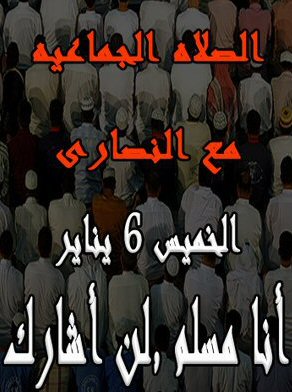
El-Mokhles TV, one of the organisers of the campaign against the joint prayer of solidarity on January 6 hosts a number of links like this one which propagate conspiracy theories about Coptic organisations with links to Zionism and accuses them of perpetrating the terrorist attack. The page administrators also conducted a short survey on their status at 02:42 on Tuesday asking participants 'Who do you think is the biggest beneficiary from the Alexandria attack -- Copts? Muslims? the State? Other?' The results are shown in the screenshots below:


Another post on the page asked whether the attack targeted the Al-Qidissain Church or the mosque across the street. Again, the result was very 'alien' to Egyptians although the respondents weren't : the attack targeted the mosque of course -- the explosion occured 3 metres away from the mosque and 8 metres away from the church, and yet, the victims were predominantly Christians, go figure!

Of course, this all points to one thing -- of course they don't point to the rapid spread of hate speech and conspiracy theories in a socially-decaying Egyptian society; nor does it point towards a failed state and a culture of repression and counter-repression. If any thing, they point towards 'foreign' hands and 'alien' ideas that are conspiring against Egypt -- maybe Zionist or American, but maybe Iranian or Shi`a given the new wave of regional hate-speech and incitement.
Sigh. I leave it in your hands to judge.
7
Fouad GM
Thank you.
************************************
ينصر دينك يابطل
Read more...
مصطفى حلمي عن تفجير الاسكندرية : ينصر دينك يابطل
UPDATE: There has been much ambiguity as to who the real author of this poem is. Most sources I have come across online attribute it to Ahmad Fouad Negm although the style is significantly different to Negm's -- my assumption was that Negm produced this poem hastily in response to the NYE terrorist attack.
However, it has come to my attention after consulting with commenters on this post and others online as well as after contacting Mostafa Helmy and accessing the original note on his Facebook page that the poem is indeed authored by 28-year-old Mostafa Helmy -- not Ahmad Fouad Negm.
First of all, I would like to express my solidarity with Helmy against plagiarism -- part of a general trend of disrespect and disregard of intellectual property rights common amongst Egyptians in general and the Egyptian online community in specific. Secondly, I would like to apologise to Helmy (as well as Negm) for having taken part in propagating the poem as a work of Ahmad Fouad Negm for the past day or two.
Finally, I would like to apologise to my readers for misinformation -- Most importantly however, I wish to thank those who commented on the post in public and in private for correcting my information.
Please keep up reading, interacting and contributing to my blog and others' -- it's the only way so-called 'citizen journalists' can continue to express opinions guided by your opinions and knowledge.
Thank you.
************************************
ينصر دينك يابطل
مصطفى حلمي عن تفجير كنيسة القديسين بالاسكندرية


ينصر دينك يا بطل
قتلت ناس عُزًّل كتير
ستات، شيوخ وكمان عيال
ازحت عنا خطر كبير
دي ناس بتقول الله محبه
والمحبه دي شئ خطير
إقتل بطرس وإقتل مينا
اللي إخواتهم ماتوا في سينا
واللي ولادهم رقصوا فـي فرحك
واللي فـ ميّتم بيعزّينا
إقتل ماري وطنط تريزا
دول ناس مافيهومشي ولا ميزه
دايمًا كده يبتسموا في وشك
ويقولوا اهلاً خطوه عزيزه
وإقتل برضه عمّك حنا
في اي خناقه بيحوش عنّا
غاوي يصّلح بين الناس
ولا يمكن يوّرد على جنّه
وإقتل سامي ناجي نجيب
اصل الإسم صراحه مريب
يمكن يطلع واحد منهم
او داقق على إيده صليب
ولا اقولّك...إضرب شبرا
والكيت كات وميدان الاوبرا
فجّر واحده في كل مكان
خلّي جيرانهم يصبحوا عبر
لينا رب إسمه الكريم
ها يجي يوم تعرض عليه
تقف امامه و يسأل الشخص ده عملك إيه؟
بأي ذنب تقتله
وفين ومين وإزاي وليه؟
إبقى قول لي يا بطل
ها ترد يومها..
وتقول إيه؟
0
Fouad GM
Read more...
Alexandria attack reveals the fragility of the Egyptian state and the precariousness of social order
I have always been a fan of Wael Abdel Fattah's coverage of Egyptian affairs for the Lebanese daily Al-Akhbar, but his coverage of the recent terrorist attack on Al-Qidissain Coptic Orthodox Church in Alexandria on New Year's Eve simply topped it up. The article was published a day after I published a post criticising an Egyptian middle-class-in-denial. In my post, I argued Egyptians must admit that the attack was not as 'alien' or 'foreign' as they would like to assert and that the root causes of social conflict (sectarianism included) are entrenched in a decadent political system and a rotten social order.
At the end of my previous post, I asked if there were Egyptians with the balls to admit the ills of society and polity at the root of this heinous terrorist attack. The next morning, Wael gave me my answer.
Wael published another article on Tuesday, 4 January 2011, discussing the sectarianisation of Egyptian society and the ascent of Christian fanaticism and a discourse of martyrdom among Egypt’s Copts in the wake of the attack – another must-read!
 Angry Copts at the Cathedral of Saint Mark attack dignitaries and ministerial delegations with stones, shoes and angry chants. Dignitaries, Sheikhs and ministers have been visiting Pope Shenouda III to show solidarity and express condemnation of the terror attack.
Below are excerpts from his article published on Monday, 3 January 2011.
الموت في انفجار كنيسة القديسين لم يكن حادثة إرهابية عادية، لكنه لعب خطر على بناء المجتمع في مصر. وسواء كان الجناة «أفعى» لها رأس في الخارج وجسم في الداخل، أو وحش محلي يكبر في السر منذ سنوات، فإن قنبلة المسامير أشعلت الفتنة التي لم تعد تنام طويلاً. أشعلتها ومعها شعور بالخطر تحركه كثير من عواطف الفزع من الموت، وقليل من عقل يقفز فوق النار الطائفية
بداية من الرئيس إلى أصغر ضابط في الشرطة، يبحث نظام حسني مبارك عن أفعى تسرّبت من التجمعات الأمنية، وأشعلت السنة الجديدة كلها. سنة «الحسم» بدت حاسمة فعلاً في كشف «رخاوة» في جسد الدولة. وبعد ساعات من انفجار كنيسة القديسين، هاجم ملثّم نقطة شرطة وقتل شرطياً وسرق سلاحه الرسمي. وفي سياق الاحتجاج على الانفجار، قطع أقباط طريق الاوتوستراد، ومنعوا مرور السيارات. «الطريق» و«السلاح» هما من رموز الدولة التي تحاول استدعاء المجتمع لنصرتها في المحنة بحديثها عن الأفعى، والمجتمع خارج السيطرة، يشعر بالخطر، ويدافع بفوضوية عن تماسك ما. كل العناصر موجودة في حال الدفاع ضد الخطر: في المقدمة تعصّب يرفع شعارات دينية. الأقباط يصرخون بشعار تهتز له الكنائس: «بالروح بالدم نفديك يا صليب» و«مهما يعملوا فينا... العدرا ها تقوّينا». المسلمون في العادة يردّون في العلن بهتافات «الله أكبر»، وفي السر بشماتة ساذجة: «لكي يتوقفوا عن الاحتفال برأس السنة في دولة مسلمة». صوت التطرف الإسلامي خافت، لم يكن أمامه إلا البحث عن عدوّ خارجي. أشار الدكتور محمد سليم العوا مثلاً بإصبع الاتهام إلى «الموساد» ليلتقي مع الدولة في بحثها عن الأفعى، وليغسل يديه شخصياً من صنع موجات تحريض ضد المسيحيين ومعهم في مصر. دعوات صنعت له نجومية أخيرة، تأتي في سياق وضع توازن مع الكنيسة ونجومها. العوا لمع أخيراً لأداء دور في تحجيم قوة الكنيسة عن طريق عناصر من خارج المؤسسة الدينية
رجل دين عادي، مثل الأنبا بيشوي، يترك موقعه الكهنوتي ويتحدث قبل أسابيع من الانفجار كزعيم سياسي عن ضيافة المسيحيين للمسلمين في مصر. ثم يفجّر قنبلته بالحديث عن آيات القرآن الكريم التي تكفّر المسيحيين، ويتساءل عن وجود الآية من عدمه، لتمرّ فكرته في إطار كلام عن تحريف القرآن
الدولة تتحلل، بينما يكاد مخزون العنف ينفجر في مواضع خطرة هذه المرة
هتفت جموع مسيّسة ضد أسطورة الأمن التي لم تعد مهتمة إلا بتأمين المقاعد العليا، بينما أمن المجتمع مشروخ ومفزع. الهتافات اتهمت الدولة وأمنها مباشرة بالإرهاب «يا بو دبورة ونسر وكاب... إنتو الي عملتوا الإرهاب». ورأت أن المجتمع يحمي مصر وليس الدولة في رسالة «قولوا للحاكم جوا القصر إحنا الي بنحمي مصر» ... قنبلة رأس السنة أزالت أقنعة متعددة، لم يعد فيها مقبولاً إنكار الدولة: ليس هناك مشكلة طائفية. مصر وطن خال من التعصّب. وبعد كل فتنة يقبّل الشيخ القسيس و«اللي في القلب في القلب يا كنيسة... أو يا جامع» ... بعد التصوير يعود المسلم إلى البحث عن قلعة للمسلمين ويختبئ المسيحي تحت خيمة الكنيسة. هي حرب أهلية غير معلنة، لكنّ تفاصيلها أصبحت واقعاً يومياً يزداد ضراوة
حياة على الهوية لم تصل إلى درجة تكوين ميليشيات، لكنها أصبحت عادة، في المدرسة وإشارة المرور، والصراع على التجارة، بل ومنافسات بناء دور العبادة. الجديد أن الدولة، التي تشيخ مع حكامها، تتعامل بالهوية، وما لا يعلنه المسيحيون هو أنهم يشعرون بضعف الهمّة في حماية الكنائس رغم تلقّي التهديدات، لأنها (التهديدات) تخصّ مسلمين وتسبّب للضباط المسلمين شرخاً في الوعي
هذا عنصر جديد أضيف إلى التمييز التقليدي المتوارث، منذ أن تراجعت رغبة المجتمع كله في الدولة المدنية الحديثة التي لا فرق فيها بين مسلم ومسيحي ولا بين بحراوي وصعيدي أو غني وفقير. لا فرق في الحقوق الأساسية، ولا توزيع مناصب حسب الحصص الطائفية
«وحدة عنصري الأمة»
السخافة ليست في الشعار. ولكن في أنه كان مرفوعاً في ثورة 1919، لحظة تكوّن الأمة المصرية، وانصهار الطوائف في دولة حديثة لا تعترف باللون والجنس والدين. وبعد ما يقرب من 100 عام، عندما يُرفع الشعار نفسه، فإنه إشارة إلى تغلغل الطائفية إلى حدّ تشتعل فيه حرباً أهلية تحت كل سرير وفي كل زاوية ولا يشعر المجتمع بالنار. الرصاصات والقنابل تعميد للكراهية، وصور الشهداء تكريس للفرقة والانشقاق
عندما يكون ضحايا المذبحة «شهداء المسيحيين»، فهذا يعني أن هناك انتقاماً آتياً أو دماً معلّقاً يخصّ طائفة ضد طائفة أخرى


Sunday, 2 January 2011
2
Sunday, 2 January 2011
Fouad GM

I care to see a more aware and a more proactive Egyptian middle class: one that does not view sectarian violence as "a distortion of religion" or "a Zionist plot" ... I care to see an Egyptian middle class that does not hide behind the ridiculousness of "Long Live the Crescent and the Cross" to disguise a culture of political apathy.
Read more...
Manning up and growing some balls ... For Egypt's sake
A friend of mine wrote a short Facebook note which he ended with the provocative (even blasphemous) phrase:
طزّ في الهلال قبل الصليب . و ماحدّش يكلمني عن "الدين" الصحيح(tr. screw the Crescent as well as the Cross ... And do not talk to me about "real" religiosity)
His remark comes in context of the heinous attack on the Coptic Orthodox Church of Al-Qidissain Mar Murqus and Mar Butrus in Sidi Bishr, Alexandria. The attack took place shortly after midnight as a 1000+ congregation gathered in the church for midnight mass on new year's eve causing shock and terror on a scale unprecedented since the 1997 Luxor massacre (bearing in mind, the former targeted the lucrative tourism industry empowering the state whereas the latter targeted Egyptian Copts).
Egyptians' reactions have followed a usual, predictable and rather 'conservative' pattern ranging from expressing outrage at the attack to expressing solidarity with the Coptic community. The more daring, pointed their fingers at the failure of Egypt's repressive security apparatus; linked the attack to the precarious political situation in the country; or called for the dismissal of Minister of Interior Habib El-Adly or holding him accountable for torture, the perpetuation of the State of Emergency and for the repeated failures of the security apparatus in preventing terrorist attacks or bringing the perpetrators to justice.

The Coptic Orthodox Church hosts an annual iftar in Ramadan as a complimentary show of national unity, another example of the "Crescent and the Cross" denialism [source: 3arabawy on FlickR].
The usual response has been the same since the turn of the twentieth century: an outburst of the famous slogan "عاش الهلال مع الصليب" (Long Live the Crescent and the Cross). On the other hand, while expressing outrage at a terrorist attack; the alleged kidnapping of a convert from one faith to the other; or sectarian clashes here and there ... Egyptian's are accustomed to repeating a number of lame phrases with little or no meaning. These include "there must be foreign hands behind this heinous crime" because "Egypt is known for the coexistence of its 'two components', Christians and Muslims"; "this is a distortion of genuine religiosity"; and "religion doesn't preach such a crime against innocent people".
The more 'political' will point fingers towards the USA or Israel and accuse them of "meddling in Egyptian affairs"; "inciting sectarian hatred"; and "attempting to divide the otherwise-inseparable Egyptian nation."
This is not just a popular view, but also an institutional one which the Egyptian Coptic Church, the Muslim establishment and the government work together to propagate. The press conference held in the Coptic Orthodox Cathedral of Saint Mark in Abbasiya, Cairo by Pope Shnouda III, Grand Imam of Al-Azhar and Minister of Religious Endowments is a case in point. President Mubarak's speech in the aftermath of the terrorist attack on Al-Qidissain Church in Alexandria is another case in point.
Mubarak: The attack bears the hallmarks of the sinful hands of external forces [...] who targeted our nation, Muslims and Christians alike [...] The terrorist attack is 'foreign' to us! And left the blood of our innocent martyrs mixed on the streets of Alexandria.
Hundreds of thousands of Egyptians changed their Facebook profile pictures and statuses to correspond to the terrorist attack. Images of Crescents and Crosses coloured with the red-white-and-black colours of the Egyptian flag flooded the social networking site and tens of thousands of Egyptian flags replaced Egyptians' profile pictures. Some, Muslims and Christians alike, even used pictures of Coptic churches and sacred iconography in place of their profile pictures.
Once again, "Long Live the Crescent and the Cross" dominated Egyptians' reactions to the attack whose magnitude is yet to be realised. Needless to say, it is slightly refreshing to see that some still resort to notions of national unity and a legacy of coexistence (even if it's just mythical) in response to such an attack.
But I do wonder, how much thought has the average Egyptian put into the attack? How much thought have these innumerable people who use Crescent-and-Cross slogans, images and symbols given to the causes of the attack and its repercussions?
Very little it seems.
Little has been learnt from the previous attacks against Egypt's Christian community and the noticeable escalation of sectarian strife in Egypt since 2008 has been allowed to go on despite occasional outbursts of condemnation by Egypt's middle classes. How come so little has been said of the innumerable online forums and Facebook groups issued repeated terror threats and incited? Interestingly, when a number of these forums and groups surfaced to the attention of the online Egyptian middle class, they were immediately reported to online administrators and were eventually closed down - but no conclusions were made; debate was barred; and no lessons learnt!
Even worse, very little thought and certainly-insufficient attention has been paid to the attack on the Syriac Catholic Church of Our Lady of Salvation in Baghdad in October 2010 by Al-Qaida's Islamic State in Iraq which declared the attack a 'warning' to Egypt's Coptic Church.
Which brings me to the real issue. Yes, I believe the attack might well have been the doing of Al-Qaida. Yes, it might well have been funded by external sources. And yes, it might well contribute to the further fragmentation of Egyptian society which might further the strategic gains of this foreign country or the other.
But why did the perpetrators of the numerous sectarian clashes of the past three years find it justifiable to attack Egyptian Christians and their churches? Why did Al-Qaida's 'ever-so-foreign' brand of terrorism and it's "false interpretation of Islam" appeal to some Egyptians?
On the other hand, why did angry Christian protestors view this as a 'Muslim attack' against 'the Christian community'? Why did they not subscribe to the official narrative that this is a 'foreign attack' on 'Egypt as a whole'? Why have angry mobs demanded Pope Shenouda III not receive the Grand Imam of Al-Azhar? Why has the slogan "with our souls, with our blood, we redeem the Cross" dominated young Copts' protests? And why have Coptic youth throughout the country expressed their desire to be martyred in defence of the Cross?
Clearly the glamourous slogans of "Long Live the Crescent and the Cross" along with the externalisation of responsibility are not as convincing for Egyptians as they are omnipresent.
One might be a man of faith. One might be convinced that religion preaches benevolence. One might even believe that religion unleashes the good in man and not the heinous, hateful and vengeful. You might be confident that an attack like that on the Al-Qidissain Church is not an act of Islam, but an act of terror. But if you harbour such convictions, you need not wait for an alibi to prove your faith's innocence. In fact, you, more than anyone else, should be seeking the real cause behind sectarian violence.
It is high time for Egyptians to stop burying their heads in the soft sands that are engulfing their country. It's high time for Egyptians to stop using colourful and glamorous veils tainted with words and sentiments of an artificial national unity to blind themselves from the evidently internalised sectarian conflict within Egyptian society. It is time we ignore the benefit foreign powers might gain from internal divisions and focus on why these divisions exist and how they go violent.
For these reasons, I couldn't agree more with Ahmad Gharbieh ... TOZZ ... I do no care for the Crescent, nor do I give a sh*t for the Cross !
Enough propaganda, enough lovey-duffy bullocks and let's face our issues before Egypt descends into endless 'Lebanonisation' - or should I say, 'labwanisation'.
Instead of upholding artificial notions of national unity, I insist on aspiring and working towards an Egyptian middle class with the balls to acknowledge the deep structural imbalances in Egyptian society and the entrenched political failures of over a century! Let there be an Egyptian middle class with enough courage to hit the nail on the head and tackle these structural imbalances and failures.
Let us leave the Crescent and the Cross aside and lets address the role of religious institutions in public life; tackle the question of citizenship and citizen rights. Let us reform a political system that thrives on dealing with society in a segmented form; let us reform a security apparatus that skillfully terrorises citizens and tortures them but categorically fails to defend public life and private property from petty criminals, organised crime and terrorism. Let us address the structural imbalances in the relationship between the institutions of the state and the severe regional and class disparities.
Subscribe to:
Posts (Atom)


