Friday, 29 October 2010

1

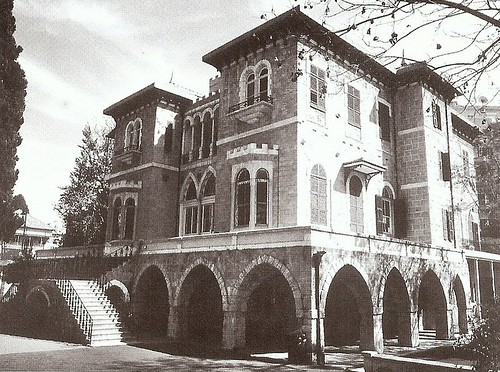
Zokak El-Blat: a step towards the preservation of Lebanese heritage?
  • Friday, 29 October 2010
  • Fouad GM
  • After a long battle in the bureaus of The Municipality of Beirut and other government offices, the Municipality took its decision (number 977) to appropriate the 19th century mansion houses of Fayrouz and Bechara El-Khoury some two years ago. Nevertheless, it has taken the government two years since then to take a decision to enforce that. Today's daily Al-Akhbar reported that nine days ago, the dossier (number 4011) landed on Minister Ziad Baroud's office in the Ministry of Interior.

    The appropriation of the 19th century mansions aims at preventing their further depreciation and deterioration as well as their preservation as relics of an Arabo-Lebanese belle epoque.

    Lycée Abdel Kader, Zokak El-Blat (former mansion of Dr. Hyppolite de Brun)

    The two questions that spur to mind now are: (1) will the government, which has taken years to claim property of these sites, act quickly and take over control before contractors lay their hands on these houses? Or will it be bribed into slow-motion until it's too late?

    More importantly however, (2) how will the bourgeois-driven government deal with the squatters and IDPs who have lived and worked in these houses since the early days of the Civil War? Will it brutally expel their small businesses and evict their families without compensation and resettlement in something more humane? Or will they be left vulnerable and needy, and by extension, become easy prey for the political parties, multinational business groups and militiamen who divide Zokak El-Blat and Centre Ville between them?

    The shameful eviction of IDPs (muhajjarin) from Qasr Aker, Qasr Ziadé and Qasr Hneiné in the northwest of Zokak El-Blat for a proposed Solidere expansion beyond Boulevard Fouad Chehab and the subsequent predation of political parties upon them are perhaps a constant reminder of the Lebanese government's failure to put a limit to the elite's expansion at the expense of both less fortunate citizens as well as national (and pan-Arab) heritage.

    Having said that, activists and admirers of Beirut's endangered heritage will undoubtedly celebrate the good news - and they have the right to! But they mustn't get too excited!
    These two houses were only appropriated by the government because there has been no claims of ownerships by heirs of their founders and their inheritors.

    So the crucial question now becomes: will the government have the balls and the political will to enact laws protecting the few remaining relics of Beirut's heritage in private possession? Or will the government's subjugation by the elite prevent it from taking such decisions? After all, no many amongst the elite want to see their mansions classified preventing them from converting the antique houses into more profitable concrete towers!

    While living in Beirut last year I wrote a few times on Beirut's endangered heritage and I blogged on the "buying and selling of the city" as well as my reflections on the "cries of a Nostalgic Beiruti" whose cries have been translated into an active initiative: Save Beirut Heritage which, regardless of any reservations, one must commend and encourage.

    My FlickR album Zokak El-Blat : un quartier et une histoire à raconter is a collection of some photos I took (2009-2010) and older ones I collected. Combined, they explore some of the aspects of the story of a neighbourhood that was home to Beirut's nahda in the 19th century. Unlike all the other FlickR albums from Beirut and elsewhere, I have not yet had the time to add captions and details under each photo.

    You may also want to check my other FlickR sets which are a collection of some ten thousand photos I've taken throughout the past five years.
    Read more...

    Thursday, 28 October 2010

    1

    Vola vola, palombella : from our childhood with love

  • Thursday, 28 October 2010
  • Fouad GM
  • I intended to post something politics-free, just musical, cultural, artistic. But politics made its way into it - only a bit though!

    This bilingual Italian-Arabic song that, along with other childish-cheesy songs, made it to the top of the chart on kids' TV channels in Egypt and the Arab World. I recall this song clearly, I even recall a kindergarden performance we had when I was perhaps 5, in which we re-sang it on stage!


    Oh, the days!

    Nadina: Vola vola (1986)
    Nadina is from Barja, a village near Chhim in the Chouf Mountains. After her parents escaped the carnage of the Civil War, Nadina was "discovered" by Palestinian-Egyptian composer and maestro Salim Sahab who nurtured her talent.

    This song was first performed on 22 November 1986 in Bologna. Then six years old, Nadina performed this song at the Antoniano dei Frati Minori as part of the 29th Zecchino D'oro festival held by UNICEF. The song made her a child star with an audience of some 25-million people worldwide.

    The song was a bilingual (Italian-Arabic) translation of Majida El-Roumy's late 1970s song by the same name "Teeri Teeri, Ya Asfoura".


    Nadina's family finally decided to leave Lebanon for good in 1989 and never return to the war-torn country. The child star would become an athlete, swimmer and singer in Canada where she continues to live.

    She is expected to release a new album soon according to her website.


    Remix (2008?)
    More than 20 years later, Nadina reappeared with a dance remix of her song, Vola vola palombella. The video, directed by Silvio Pollio, features 20-30 year old Lebanese men and women sat around an argileh (shisha). Dressed in the different costumes of the country's then-warring sects, the young men and women reminiscing on the song against the backdrop of flashbacks of these times. They debate where "the girl who sang Vola vola palombella" might have gone before Nadina appears and re-sings her song to the beats of Arabo-trance - something that'd pretty much suit modern Beirut nightlife!

    The new video clip is dedicated to the memory of Maestro Mariele Ventre who directed her original performance in 1986.


    Vola vola palombella (1986)

    Lyrics: Joseph Abi Daher
    Composer: Ihsan Almounzer

    The Italian lyrics:
    vola, vola palombella = fly, fly little pigeon
    prima che scompaia la mia stella = before my star disappears
    un bacino sulla fronte = and a little kiss on your forehead
    Porta il sol che spunta all’orizzonte = bring the sun that appears in the horizon
    e se un chicco d’oro ti darà = and if it gives you a gold grain
    un chicco di felicità = a grain of happiness
    me lo presti, amica bella? = can you lend it, beautiful friend?

    The Arabic lyrics
    بيتك يا عصفورة وين؟ = where is your nest o! bird?
    ما بشوفك الا بتطيري = I only see you flying
    ما عندك غير جناحين = you only have wings
    حاكينا كلمة صغيرة = talk to me, tell me something

    لو سألونا منقلن = if they ask me, I'll tell them
    ما حاكتنا العصفورة = the bird didn't talk to me

    طيري طيري ... يا عصفورة = fly, oh fly! O! little bird


    Majida El-Roumy: Teeri teeri ya asfoura!
    Below is a video of Majida El-Roumy's original performance of the song in the late 1970s.

    Read more...
    0

    المركز المصري للحقوق الاقتصادية والاجتماعية يتهم المجلس القومي للأجور بالتحايل على حكم محكمة القضاء الإدارى

  • Fouad GM
  • فيما يلي نص البيان الصادر اليوم الخميس 28 أكتوبر 2010 عن المركز المصري للحقوق الاقتصادية والاجتماعية ردا على الحد الأدنى للأجور الذي أقره المجلس القومي للأجور يوم الثلاثاء 26 أكتوبر 2010 :

    انعقد اليوم المجلس القومي للأجور بعد إصدار الحكم الثاني على التوالي لمحكمة القضاء الإداري بمجلس الدولة بالقاهرة، يوم الثلاثاء الماضي، والقاضي بإلزام الحكومة بوضع حد أدنى للأجور في المجتمع يتناسب مع الأسعار. هذا وقد انتهت أغلبية الآراء في المجلس القومي للأجور إلى إقرار الصيغة التالية (رفع الحد الأدنى للأجر الشامل الذي يتقاضاه العامل على المستوى القومي إلى 400 جنيه) حيث وافق ممثلي رجال الأعمال وممثلي الحكومة على هذه الزيادة وهذه الصيغة في الوقت الذي رفضها ممثلي اتحاد العمال .

    ومن الجدير بالذكر أن آخر حد أدنى للأجور في مصر هو 35 جنيه بموجب القانون 53 لسنة 1984 وبإضافة العلاوات إليه يصبح 112 جنيه وهو الحد الأدنى للأجور الذي تقبل التأمينات الاجتماعية التأمين عليه، وقد طالبت الحركة العمالية المستقلة بمبلغ 1200 جنيه كحد أدنى للأجور.

    وفى هذا السياق يؤكد المركز المصري للحقوق الاقتصادية والاجتماعية على رفضه للقرار لعدة أسباب:

    1- أن القرار بصيغته التي صدر بها يمثل تحايلا واضحا على الحكم القضائي فبدلا من أن يقر المجلس حدا أدنى للأجر في مصر وضع حدا أدنى للأجر الشامل والفارق بينهما كبير، فالحد الأدنى للأجر الذي صدر بشأنه الحكم القضائي يقصد به بداية الأجر أي (الأجر الأساسي)، أما الأجر الشامل الذي تناوله المجلس القومي للأجور في قراره فيقصد به إجمالي ما يتقاضاه العامل من الأجر الأساسي مضافا إليه العلاوات والبدلات والمكافآت والتي يخصم منها اشتراكات: التأمين الصحي والاجتماعي، والضرائب، ورسم اشتراك النقابة، وصندوق العاملين إن وجد.

    2- ان تنفيذ الحكم على هذا النحو يفرغه من مضمونه، فقيمة أي حكم قضائي تكمن في تنفيذه تنفيذا حقيقيا لا تنفيذا صوريا كما فعل المجلس القومي للأجور،.

    3- و إذا كانت هذه الزيادة التي قررها المجلس تمثل خطوة للأمام سوف يستفيد منها بعض العمال الذين مازالت أجورهم الشاملة أقل من ملبغ ال 400 جنيه إلا أنها خطوة لا تلبى طموحات وتطلعات الطبقة العاملة المصرية، ولن تساهم في رفع المعاناة الاجتماعية والاقتصادية عنهم فمضمون الحكم القضائي هو وضع حد أدنى للأجور يتناسب مع الأسعار ويضمن للعمال حياه كريمة والواقع يؤكد أن مبلغ ال 400 جنيه التي قررها المجلس باعتبارها أجرا شاملا لا تتناسب أبدا مع أسعار السلع والخدمات الأساسية خاصة أنها في الواقع سيتقاضى منها العامل ما يعادل 300 جنيه فقط بعد الخصومات والضرائب، وبالتالي لن تضمن للعمال والموظفين أي حياه كريمة.

    وإذ يشيد المركز المصري للحقوق الاقتصادية والاجتماعية بموقف ممثلي اتحاد العمال الرافض لهذه الزيادة، يؤكد المركز على اعتزامه الطعن على هذا القرار الجديد للمجلس القومي للأجور، واتخاذ كافة الإجراءات القانونية الكفيلة بتنفيذ الحكم تنفيذا حقيقيا، وبما يكفل وضع حد أدنى للأجور يتناسب فعليا مع الأسعار


    ___________________________________

    و من الجدير بالذكر ان هذا الصراع تفجر حديثا و بعد عقدين و نصف من التجاهل اذ أن الحد الأدني المعمول به في مصر و قيمته 35 جنيها في الشهر قد تم تحديده سنة 1984 و لم يراجع منذ ذلك الحين.

    الفيديو المرفق جزء من برنامج " العاشرة مساءً " الذي تقدمه منى الشاذلي على " قناة دريم " و يتضمن تقريرا عن المظاهرات العمالية المطالبة بتحديد حد أدنى عادل للأجور بعد صدور قرار المحكمة الإدارية التاريخي في مارس 2010. و يتضمن التقرير آراء بعض الناشطين و العمال و المتظاهرين المطالبين بـ1200 جنيه مصري شهريا كحد أدني للأجر لتكفل لهم الحياة الكريمة في ظل تضخم الأسعار الملحوظ في مصر.

    أما الفيديو المرفق ادناه فهو لقاء اجري مع المحامي خالد علي مدير المركز المصرى للحقوق الإقتصادية والإجتماعية و أحد الموكلين بتمثيل المطالبين بحد أدني للأجور شارحا لـ" قناة الحياة " حيثيات حكم المحكمة الإدارية الثاني و الذي صدر منذ أيام مؤكدا ما جاء به الحكم الأول الصادر في شهر مارس 2010 و يلزم رئيس الجمهورية ورئيس الوزراء والمجلس القومى للأجور بوضع حد أدنى عادل للأجور فى المجتمع. و في هذا اللقاء يشرح المحامي خالد علي الفارق بين الحد الأدنى للأجر و الحد الأدنى للأجر الشامل و هو ما يدعو الناشطون العماليون لزيادته بمقتضى القوانين و الأعراف الدستورية و الدولية التي تنص على انه يحدد من قبل الدولة و لا يترك للتفاوض بين العامل و صاحب العمل على ان يتماشى هذا الحد الأدنى مع (1) أسعار سلة المستهلك و الخدمات الحكومية من جهة و (2) متوسط الإعالة.

    مظاهرات الحد الأدنى للأجور - العاشرة مساءً

    المحامي خالد علي معلقا على قرار المحكمة - أكتوبر 2010
    Read more...

    Tuesday, 26 October 2010

    2

    نخبوية الاصلاح في مصر : هوة الاغتراب في الداخل وأزمة الاغتراب في الخارج

  • Tuesday, 26 October 2010
  • Fouad GM

  • هل يخطط البرادعي لثورة في مصر ؟ و هل من حق المقيم في الخارج التخطيط لثورة في بلد اغترب عنه و لم يعد يقيم فيه ؟

    و إن لم تطرح هذه الأسئلة بشكل مباشر على البرادعي في لقائه مع رضا اصلان أو في غيره من اللقاءات مع البرادعي الا انها تظل بعض أهم انتقادات خصوم البرادعي من داخل معسكر المطالبيين بالإصلاح و خارجه

    لن أناقش و لن أخوض فيما اذا كان البرادعي يخطط لثورة في مصر أم لا ... و لكنني سأشارككم و أبوح لكم بالبعض من خواطري عن معسكر المطالبين بالإصلاح و الديمقراطية في مصر و بين ابنائها المغتربيين

    كلما اندمجت في دوائر المتحمسين للإصلاح و الناقمين على الحال المذري الذي آلت اليه مصر و كلما و تحاورت مع دعاة الإصلاح و التغيير في مصر و بين مصريي المهجر اكتشفت أكثر فأكثر ان أكثرهم مكبلون بقيود الفوقية و نظرتهم الدونية للشعب قبل النظام و فساده . و مما لا شك فيه فإن نظرتهم للإصلاح (أو ما يسميه بعض المبالغين " ثورة ") هي أنه نتاج تنظيرات منظريهم في صالونات الإصلاح في الداخل و الخارج بين ابناء من سمّوا انفسهم "الكتلة الحرجة" ثم (1) اما ابلاغ نتائج التنظير و ما توصل اليه المنظرون من نتائج و تحريض الجماهير " لما فيه مصلحتهم " كالـ" نقاط السبع " أو الخطط و التعويذات السحرية و ما الى ذلك . أو (2) استغلال تفوقهم العلمي قدراتهم و مقدراتهم الاقتصادية (الإقطاع الزراعي في 1919 و الاقطاع الشركاتي بعدها بقرن) لحشد المواطنين المقيمين في الداخل - " الكتلة العددية " يعني

    الجبهة الوطنية من أجل التغيير

    يعنى أهم عناصر الثورة الحقيقية, و التي تتطلب تواجدا على الأرض بين ابناء الشعب فعلا, غير مطروح . فربط المطالب اليومية للمقهور و المطحون و المنسي من الشعب بالاصلاح السياسي و المؤسساتي الشامل لا يندرج على أجندة تلك التكتلات و الجبهات و التحالفات الاصلاحية العديدة في مصر و بين مغتربييها

    بناء على هذا تحليل لتاريخ مصر الطبقي و السياسي الحديث , لا أرى تعارضا بين اقامة فلان في الخارج و امكانية تخطيط هذا الفرد أو هذه الجماعة لثورة ما في مصر فلا أرى فارق بين فوقية المقيم في أوروبا و أمريكا و فوقية المقيم في الرحاب و الشيخ زايد و بفرلي هيلز

    و بالرغم من ذلك تطرح قضية أحقية المصريين المقيمين في الخارج و مزدوجيي الجنسيات و كثيري السفر و الإستثمار في ابداء رأيهم في قضايا الإصلاح و التغيير و التشريع في مصر . و لعله لا يخفى على من يعرفونني انني لست مؤيد حتى لمنح المصري غير المقيم (و ليس المسافر مؤقتا) حق الإقتراع في الإغتراب و ذلك حتى لا تتسع دائرة سارقيي القرار من المواطن العادي لتشمل ابناء المهجر اللي ممكن ميكونش لهم في مصر اكثر من سياحة اسبوع في السنة

    و رغم ذلك اسأل من يطرحون قضية أحقية المصريين المقيمين في الخارج و مزدوجيي الجنسيات في ابداء الرأي و لعب دور في الحراك الفكري و السياسي في مصر ... هل تدعون أن المقيم في مصر أكثر اتصالا بالواقع المصري من المقيم في الخارج؟

    يعني ببساطة كده : هو ينفع واحد مغترب في احياء القاهرة الفخمة و مدنها الجديدة و تجمعاتها المسورة المغلقة ان يخطط لثورة ؟ م هو كمان في المهجر و ان كان مهجرا مقطتعا من أرض الوطن ! اليس هؤلاء الإصلاحيين الذين " هجوا " من وسط البلد و مشاكله زي اللي اتغربوا ؟ الإثنين متناسيين متطلبات الشعب و حركاته المطلبية و كفاحه اليومي ... الإثنين ينظران معا بغية احداث تغيير! اهنا بالفعل ثورة ... ثورة ضد المجتمع الذي لا صوت له بحكم الفقر و قلة العلم و قلة الحيلة؟

    إن ما أطرحه هنا هو تحليلي الشخصي وليس اتهاماً أو تشكيكاً، وهو لا يعني أنني مؤمن أو متبني الأقاويل و الإدعاءات بأن أفرادا أو جماعات داخل مصر أو خارها قد دعوا إلى الإصلاح والتغيير فهم إذن يخططون لثورة
    Read more...
    0

    Egyptian televangelists debate the authorities' crackdown on Islamic sattelite channels: a political grievance or a sectarian one?

  • Fouad GM

  • In the run-up to the parliamentary elections scheduled later this month and presidential elections in 2011, Egyptian authorities have started an all-out crack down on activists, journalists, pro-democracy groups as well as the media.
    In the immediate aftermath of the confrontation between Al-Dostor's new owners and its veteran editor-in-chief, Egyptian authorities issued strongly-worded warnings to almost forty sattelite channels broadcast from Egypt. The warnings came in tandem with a number of closures which targetted a number of these satellite channels - amongst them, ten Islamic sattelite channels.
    The question is: closing down the ten Islamic satellite channels in Egypt really motivated by the country's upcoming presidential elections and the regime's desire to orchestrate a peaceful transition from Mubarak Sr. to Mubarak Jr.? Is it an attempt to change the media landscape in Egypt in preparation for this unpopular transition (assuming it really is unpopular, and assuming popularity is a numerical figure, not a matter of informed decision)?
    Why has Alazhar issued a plethora of scholarly opinions in the recent past accusing these channels and Islamic televangelism of "unauthorised religious guidance", "misguidance", "religious mercantilism", "trading in faith and fatwas", "undermining the role of traditional and scholarly inquisition in Islam" amongst other things? Was it a genuine concern by the millenium-old community of scholars? Is it traditionalists' reaction to an age of postmodern learning, media, globalisation and transnationalisation? Or was it really Alazhar's contribution to the political transition from father to son?

    These are some of the issues discussed in a seminar entitled "Closure and Marginalisation" organised by the Freedoms' Committee at the Egyptian Journalists Syndicate.

    What caught my eye the most was the sectarian intonations of the grievances voiced by some of the more radical Sunni televangelists. Dr. Safwat Hegazy, an Egyptian televangelist, accused the Egyptian regime of "withdrawing Egypt from its traditional role" which, according to Hegazy's sectarian logic "leaves the Middle East open for Christian and Shi`a propaganda."
    Although Hegazy, like many Egyptian televangelists, is not known for hate-speech or violent rhetoric, Sunni televangelism has been behind an awakening of sectarianism throughout Egyptian society.
    Hegazy noted that, "issues pertaining to our Christian brothers and sisters and issues pertaining to the Shi`a are considered red lines which we may not cross, and their channels are guarded under the pretext of freedom of religion."
    So the question becomes, will the closure and crack on media and activists in Egypt in the run-up to the elections fall under the political grievances on an increasingly frustrated civil society? Or will it be appropriated by conservative and sectarian televangelists?
    Read more...

    Sunday, 24 October 2010

    0

    An account from the Khalid Sa`id Trial in Alexandria: نسوان بمطاوي....و هتافات ياني ياني ياني مش هعمل كدة تاني
  • Sunday, 24 October 2010
  • Fouad GM
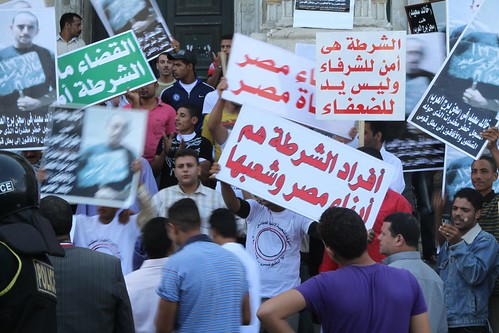
  • The following is an account from a colleague and friend who attended the trial of two Egyptian policemen accused of beating 27-year-old Alexandrian entrepreneur Khalid Sa`id to death in June. Sally Moore narrates her frustrating experience in Egyptian Arabic, expresses her feelings of anger at the anti-Khalid Sa`id protests staged outside the court and shares some of the witnesses' accounts with her readers.

    Of the many aspects of her account, one struck me the most: the chaos in court. When one Khalid Sa`id's lawyers claims a witness is present in the audience listening to another witness' account in contradiction with the stipulations of the law and the protocols of the court, the judge could only ask that Ramy whether or not he was Ramy!! The witness giving his testimony then denies that person is Ramy before the judge manages to find out he is indeed Ramy after threatening to discard his testimony!

    Sally did not mention how "he was indeed identified as Ramy" nor does she elaborate on what was his fate and the fate of his testimony after he was indeed identified as Ramy.

    That aside, I leave you with Sally's spontaneous and satirical, but very indicative and sensational account from the court room two days ago.

    Photo by Sarah Carr, 23 October 2010


    نسوان بمطاوي....و هتافات ياني ياني ياني مش هعمل كدة تاني

    كلنا يا مصر فيكي خالد سعيد مطحونين مدبوحين و متبهدلين

    جلسة محاكمة قتلة أخونا

    الساعة كانت بعد 8 وكنا ماشيين من عالبحر ف إتجاه المحكمة... الدنيا متستفة تمام قدامها وعلى بحرها

    علي قاسم عم خالد قال للظابط عشرة..رد الظابط وقال وسعلهم يابني وانتو مدو شوية: مكفكوش الفضايح دي.

    .البعيد راح مشاور على حبة مصريين كمل جايين متظاهرين ضد شهيد البانجو

    وبالاشارة المزدوجة دي سمعونا النشيد الوطني: أهم أهم أهم اليهود أهم..الغريبة إن ربنا ألهمني يوميها أتلفح بتلفيحة فلسطين وبالصدفة كانت مدارية صليبي ولا كانت ليلة أهل خالد إطينت بطين وكان زمنهم بيسمعونا أحلى سلام علصلبيين

    دخلنا باب الحساب العادل وعلطول الهتاف برة إنقلب مزيكة حسبالله: ياني ياني ياني مش هعمل كدة تاني

    أم خالد قالتلي سامعة؟ قلتلها للاسف يا ماما.. راحت متكية على ايدي و أنا مسكاهة من ناحية وأختو من ناحية وهي بتقول حسب الله ونعمة الوكيل ....صدري قفش علي و إتحسبنت أنا كمان على حال الضحية لما يصبح الجاني اللي مش هيعمل كدة تاني

    فالقاعة بصيت حولية عشان أحاول أعرف مين معنا ومين علينا..شوية كدة ودخلوا لنا فلقفص محمود وعوض..لابسين خير الله ماجعله خير أبيض ف أبيض وطالين علينا بوش ملائكي حزين...لا للاسف مكنش حزين: عوض كانت إبتسمتو عريضة ومرتاحة يمكن عشان مش هو اللي قتل؟ خدتني أوي شنباتو وسرحت فيهم كتير وتصورتهم يوم الحادث..قطع حبل أفكاري محمود.. حليوة الواد على فكرة بس وشه فكرني بالموت حسيت ببرد رهيب وخوف شديد..مكنش مرتاح..ميلت أنا على أخت خالد وقلتلها محمود مش مرتاح قالتلي لأ بالعكس أصلك مكنتيش هنا الجلسه إلي فاتت، مشفتيهوش و هو مبحلق فيا أنا وماما ورفعلنا الجورنال اللي كانو بيوزعوه بره عن شهيد البانجو..بردو جوا نفسي صممت إنه مش مرتاح وقررت اني أتنح فيه كتير وتنحت وبدأت حرب الأعصاب والنظرات..كنت ببث شعاع إدانة ف إتجاه محمود..عينه كانت بتنكسر كل متقابلني..قلت لنفسي براوة عليكي يا بت يا سوسو تنحي كمان..مكنتش خايفة والبث كان مستمر ومريح..لحد ما إنسد الفيو بشئ مخيف يا لطيف رجل بشنب انسان الغاب طويل الناب...الشعاع إنكسر وحسيت بخوف كدة..ميلت على صديقتي سوسو الحقوقية..اه هي كمان سوسو وبشكرها انها عرفتني على أهل خالد وبشكرها على دفاعها المستميت عن حق خالد وحقي وحقك..المهم قلتلها يا سوسو الرجل دة بيلعبلي شنباته بس مش بمناغشة دة برعب...ردت سوسو وقالتلي اه دة راعبني أنا كمان وعمال يبصلي شظراً..إظاهر والله أعلم إن سوسو كمان كانت بتبث معانا هذا البث الإشعاعي ف إتجاه محمود

    محكمة"....ياه علرهبة!

    صلبت ايدي على صدري وقلت يا يسوع خليك معانا...الاستماع لشهود إلنفي كان بجد شئ يحرق إلأعصاب ياكش يولعو كلهم ..كلو كان متئامر وأهبل...دكتور مينا بتاع المعمل مش فاهم أوي فلتحاليل وكمان مكلفش خاطره يحلل المادة اللزقة اه واللهي لزقة على إللفافة..بس كله كوم والأخ إلعزيز محمد رضوان كوم تاني..قمة الاداء العالي ف فيلم خيال علمي ممتع وخطير...أنا كنت قاعدة على أعصابي..حطاهم تحتي كدة وقاعدة عليهم كويس عشان ميضيعوش و أثور...أصل محمد دة بقى إلصديق إلأنتيخ بتاع خالد...هو اللي بيقول يعني..اصله صاحبه من أيام إلطفولة ..لما القاضي سأله ايه اللي بيجمع بنكم كأصدقاء من هوايات أو قصص..معرفش يرد لغاية مانزل إلوحي الالهي ودله على الاجابة: خالد كان مهندس ساوند سيستم جامد وصلحلي الجهاز بتاعي ..ساعتها كان نفسي أشق صدري وادعي عليه دعوة ولية ساعة الفجرية ...أصل اللي هو قاله دة يعني معرفة مش صداقة..بس دي مدارس يجوز! كان واضح إن القاضي زيي فاضي فراح مغلس عليه وقاله يعني أصحاب ومفيش بنكم شيء مشترك..أقدر أغلس عليك وأذنقك واسألك لو كان إلحشيش مثلاً..فرض محمد: كان الحشيش اه بس أنا بطلت يا ريس من زمان..بما إنه فيلم خيالي فالزمن بردو مش شئ نقدر نمسك عليه أوي..ماشي..وكمل محمد فيلم إلخيال إلعلمي: هو كان مع خالد خطوة بخطوة فشافه بيبلع اللفافة..بعد ما خالد وقع وبيطلع فلروح كان محمد بيسقيه مية بملح عماله تنزل من بقه..يعني خالد مخنوق ومحمد بيغرقه..لازم نقبض على محمد بقى...مش بس كدة د خالد وهو مخنوق وبيغرق طلب من محمد إنه يكلم أحمد أخوه عل موبايل..شوفو ازاي؟ دة بردو أخوه إللي محمد قال إنه كان متخانق معاه إلصبح وزعلان فراح عمل خلطة فوزية من إلترمدول، إلحشيش وأبيتريل..وكان ناوي يحبس بانجو ..ماشي نفوت دي كمان ..القاضي سأله قدروا يضربوه ؟ محمد قال مقدروش عليه اصلو كان واخد ترمدول...معلوماتي إلطبية بتقول ماينفعش يبقى سوبرمان على ترمدول بلبلعكس..ماشي يا عم إلخيال..القاضي: شفت دم يا محمد؟ لأ يا ريس مفيش...مفيش ازاي يا محمد أومال هو كان بدر منور؟ والله إلعظيم إلقاضي قال بدر منور دي...طبب هل هما حاولو يضربوه أو يسقوه حاجة بالعافية؟ لأ يا باشا دة محمود كان بس بيخبط عليه.....هههه..وعجبي

    إتحسبنت كتير كذا ساعة كدة وبعدين رحنا هاف تايم يعني فاصل ونعود ...حبينا نطمئن على اخوتنا اللي كانو ناويين يتظاهروا ضد التعذيب برة..عرفت إن الوقفة متمتش قدام المحكمة علشان قبضوا على حبة (ودي قصة طويلة بردو عن الضرب والبهدلة) وكان فيه نسوان بتفتح مطاوي علعيال اللي جايين يتجمعوا ...اوعى اوعى اوعى النكتة دي بقى جديدة: نسوان بتغز أي ورور هيهوب جنب المحكمة وكمان قدام الظبابيت..كدة أنا فهمت المزيكة الراقصة اللي كانت برة دي بتاعة ياني ياني كانت مقصودة علشان يغزوا ويهزوا

    محكمة..

    .ورجعنا تاني بس المرة دي شهود الاثبات: البواب، البوابة،هيثم كلهم شهدوا بنفس الكلام ..كلهم أكدولي إن خالد انقتل ومحدش شاف محمد رضوان دة خالص فلعمارة أصله كان لابس طائية الإخفاء أو كان بيحلم مش عارفة بالظبط...هيثم قال إنه لما شاف خالد برة السيبر الاول كان محمد ورآه بحاجة زى 4 متر كده وكان رأيه إن محمد مكنش يقدر يشوف خالد وهو بيبلع اللفافة اللي البعض قال عنها مطبقة ولبعض قال مدورة...اللفافة دي اللي طولها 7 ونص وعرضها 3 ونص ..كل الشهود دول أكدوا إن خالد أخونا انضرب..خالد انقتل...خالد صرخ حرام عليكو حموت ومحمود قاله ما إنت كدة كدة ميت...ومات خالد زي ما ماتت فيكي يا بلدي حاجات حلوة كتير ..طلعتوه حشاش خالد؟..طز ، طلعتوه سوابق؟ طزين ...المهم إن حقه مش لازم يروح ..صدق اللي قال عنك إن كل حاجة فيكي ماشية بالعكس يا أمي

    وإتأجلت قضيتنا ليوم 27 نوفمبر لسماع بقية الشهود زي الدكتور المبجل أوي السبعاوي أوف أقصد السباعي(أصله كان في الهند الشقيقة) وللمرافعة...اتعلمت حاجات كتير كنت بس بشوفها في الأفلام وأطرف واقعة كانت عندما أشار محامي خالد إن واحد من شهود النفي كان فلجلسة قدام كدة جنب القاضي طول الاستماع للشهود اخوته ...يعني كان بيغش أصله كان المفروض يطلع برة لغاية ميندهوه...المهم المحامي قال يا ريس ماينفعش كدة إن رامي يكون موجود!!! القاضي إنزعج وقال معقولة رامي موجود؟ كدة هنضتر نستبعد شهادته..رد الشاهد صاحب رامي وقال...لأ دة مش رامي!!! معقولة مش رامي؟ بصينا لبعض وعلى رامي وتأكدنا إنه رامي!!! القاضي سأله هل إنت رامي؟ ورامي مكنش عارف هو رامي ولا مش رامي في الاول..المهم يا اخوانا ظهرت الحقيقة وأقدر آكدلكم إن البعيد كان رامي ..

    مش معنى اني بهيس وأنا باحكي اني مش مخنوقة ولا متضايقة ...أنا موجوعة بس ساعات السخرية أحسن أسلوب للتعامل مع الضياع والحداد ...احنا في حداد..دة قتل دة تعذيب..من يوم ماشفت صورة خالد اللي أخدها أحمد أخوه و أنا حاسة أوجاع ف جسمي..كلنا حاسين إن خالد قريب علينا..أنا شفته أوي ف وش أخته ولما حضنتها حسيت اني حضناه..عاوزة أقوله إنت صحيت فينا حاجات كتير عاوزة أقوله مش حننساك ولا حنخاف ننزل الشارع..عاوزة أقوله دمك غالي عليا...عاوزة أقوله كرامتك من كرامتي وحقك هو رسالتي ...عاوزة أقوله حاجات كتير وجعاني...هو سامعني وزيي مش عارف يضحك ولا يبكي على دي دنيا صرم ملعونة بنت ملعونة ...على دي بلد مالناش فيها قيمة ولسة بنعشقها ونستناهة ونؤمن بيها

    تهييس بتهييس بقى أحب اختم بسلام : سلام مربع على محمد رضوان.. سلام مربع فيكي يا مصر على حقوق الانسان.. اللي بينضرب وينشاط ويندبح كالحيوان...سلام مربع على الحشيش و الترمدول والفيتامين ...سلام مربع على النسوان اللي بسنج وعلى الظباط والمخبرين ..ويا جدعان لو متنا تحت اديكو أو رجليكو والنعمة الشريفة متأسفين

    و ماحدش فيكو يقوللي اني شاربة سيجارة بني

    أنا بس ربنا ميزني بدماغ عالية طبيعي وعلطول كدة بتأكلني


    Bloggers have documented the appearance of "armed women" (khalty Farança!) at the court room threatening pro-democracy and anti-torture protestors.


    Sarah Carr has published a number of photos from in front of the court room at this third session of the Khalid Sa`id Trial on FlickR.


    El-Bashaer also published this video showing "under-cover detectives protesting against Khalid Sa`id and posing as the victims."


    Read more...

    Sunday, 10 October 2010

    0

    Meet Mohammad Sabry, Sinai's rising citizen journalist

  • Sunday, 10 October 2010
  • Fouad GM
  • Earlier today, Sinai-based blogger Ashraf El-Anani published an article on his blog, " سيناء حيث أنا " (Sinai, where I am) telling the story of a rising citizen journalist also from North Sinai.

    According to the piece emailed to El-Anani, Mohammed Sabry is an English teacher from Bir El-`Abd, a town in North Sinai. Sabry engaged in citizen journalism after the International Center for Journalists (ICJ)'s MENA regional office in Cairo admitted him to a course in social and popular media and news-writing run by the Center's Cairo office.

    ICJ's initiative aims at empowering promising Egyptians with the tools and technical skills required to express the opinions and grievances of their communities especially in the run-up to the 2010 parliamentary elections and the 2011 presidential elections.

    The course offers some training in news-writing, feature articles, investigative journalism and conducting interviews.

    Sabry's achievements were quickly recognised by the Center which. Sabry applied and was awarded one of six competitive fellowships by the School of Media Studies at the University of Windesheim in the Netherlands.

    محمد صبري الصحفي السيناوي الشاب أمام فيندس هايم
    Mohammad Sabry at Windesheim University, the Netherlands

    The fellowship allows Sabry to attend a 3-month course commencing on October 1, 2010. It's worth noting that Sabry is the only one amongst the six awarded the fellowship who had no institutional experience in journalism. The other five work(ed) for Al-Jazeera Documentaries, Dream TV, Al-Dostor Newspaper and Bibliotheca Alexandrina.

    Ashraf El-Anani refers to Sabry as "the citizen journalist" amongst the group.

    In a competition with 48 other documentaries, Sabry's short documentary has recently been voted "most interesting topic" by the ICJ and the Egyptian Journalists' Syndicate. The prize was awarded to Sabry in absentia yesterday. The documentary is entitled " صخرة ديّان : مسمار جحا لعودة اسرائيل لسيناء " (The [Moshe] Dayan Rock: an Israeli excuse to return to Sinai?) and tells the story of North Sinai's most important monument and relic of the six-year Israeli occupation (1967-1973).

    Sabry has expressed his intention to report on issues and grievances relating to his home region, North Sinai. The governorate is massively under-represented in Egypt's traditional media as well as in the Egyptian blogosphere and other social media despite its importance.

    Not only does North Sinai border both Israel and the beseiged Gaza Strip, the governorate's inhabitants have suffered repression and arbitrary detention by state authorities and unfair publicity and discrimination amongst their countrymen in the Nile Valley and the Delta. North Sinai is home to a number of large and well-established autonomous tribes who have been engaged in waves of consecutive armed conflict with the state.

    The under-representation of Sinai and its inhabitants in national and social media has left the grievances of the strategic governorate veiled behind the ignorance and negligence of the Nile Valley and its inhabitants.

    Mohammad Sabry and his likes in Sinai are essential in the development of Egyptian civil society, citizenship and social media. The role played by Sinai-based bloggers like El-Anani, Sabry and others helps bridge the gap between the grievances and reformist movements on both shores of the Suez Canal. El-Anany's efforts at documenting life and society in North Sinai as well as conflict and repression against his community have shed light on the grievances and unfair treatment of an important segment of Egyptian population - a role that had previously been played by armed conflict alone.

    More bloggers and citizen journalists need to voice their opinions and the concerns and events from within their own communities in Sinai and other parts on the peripheries of Egypt. Upper Egypt; Siwa and the Western Desert's Bedouin and Berber tribes; Sinai's Bedouins; and Nubia are but an example of the many regions and peoples of Egypt whose share of traditional and social media is all but sufficient.

    Sabry's fellowship in the Netherlands might mean he'll be unable to cover the parliamentary elections scheduled in six weeks, but it means that North Sinai will acquire a new technologically-savvy voice to voice its concerns and report from within.
    Read more...
    2

    The difference between a revolutionary and a mercenary? Fairuz's new album unearths Ziad's Tell el-Za`atar

  • Fouad GM
  • Tell al-Za`atar was an UNRWA-administered Palestinian refugee camp home to some 50,000 to 60,000. The camp was located to the north-east of Beirut, Lebanon. The camp fell within what would become the Christian canton of the right-wing Phalanges and the Lebanese Forces. Consequently, the camp's inhabitants became the victims of one of the most atrocious mass murders in the country's brutal Civil War (1975-1990).

    After controlling Karantina in another atrocious massacre earlier that year, Tell al-Za`atar was besieged for months according to a plan elaborated by General Michel Aoun, commander of the army at the time. The Phalanges, Guardians of the Cedars and Tiger militias, along with the Dekwané-based Maroun Khoury militias attacked Tell al-Za`atar on August 12, 1976. The camp fell after two months of artillery shelling which damaged the camp and killed many of its inhabitants.


    Estimates put the number of those massacred during and after the fall of Tell al-Za`atar somewhere between 1500 and 3500 refugees.

    Anyhow, the massacre itself is not my issue today. The revolutionary and sentimental cultural heritage aroused by the massacre is intense. Most prominent amongst these is the epic poem by Iraqi-born poet, Mozzaffar al-Nawwab in which he described "the fall of the capital of poverty," the "murder of the revolution in the womb of Palestinian women" and the "bazaar of Oriental organs at the doors of the Vatican."

    Tell el-Za`atar, by Mozzaffar al-Nawwab

    The surprising thing was, the Rahbani musical and theatrical heritage didn't produce anything in response to the massacre. Or so I thought/think. Fairuz's new album revealed a Rahbani answer to the epic massacre which left a stain on contemporary Lebanese history. The 4+ minute instrumental composed by Ziad Rahbani, Fairuz's son from the late `Assi al-Rahbani, takes its audience back to the refugee camp and recreates the apex of the massacre through music in a very moving, albeit short, track.


    This was in stark contrast to Marcel Khalifé who performed a piece dedicated to the memory of Tell al-Za`atar two years ago. Khalifé performed Mahmoud Darwich's poem "Ahmad al-Za`atar" or "Ahmad al-Arabi". In his performance, Khalifé "presenting it as a disinterested artistic affair" as a friend of mine put it. The performance coincided with the 32nd anniversary of the massacre, and yet Marcel Khalifé made no mention of the epic event 32 years earlier nor did he tell his audience of the link between the event and the piece he performed.

    According to Ahmad, whose disappointment and sarcasm are hard to tell apart, Marcel "was too busy socialising with Walid Jumblatt."

    Commenting on the release of the new song, Ahmad said:

    "Ziad el-Rahbani did not miss to dedicate a musical piece to Tell el-Za`atar. Respect! Two years ago, Marcel Khalifé was performing a piece that was originally written for Tell el-Za`atar, and the date of the performance happened to be on the memory of Tell el-Za`atar, and Marcel Khalifé didn't speak a fucking word about [the massacre]. I guess that's the difference between a real revolutionary and a mercenary."

    Thanks Ahmad. You're always an inspiration.
    Read more...

    Tuesday, 5 October 2010

    0

    Has repression of the freedom of expression taken on a new form in Egypt?

  • Tuesday, 5 October 2010
  • Fouad GM
  • The start of this week witnessed an important event in the history of journalism and the reform movement in Egypt. On Sunday, 3 October, veteran journalist and editor-in-chief of the independent Egyptian Al-Dostor was ousted by its new owners after a very brief confrontation with them over their decision to censor an article by Nobel Prize laureate and former IAEA director-general, Mohammed El-Baradei.


    Ibrahim Issa, who's been charged with defamation of the president and endangering national security a year ago, was pardoned by President Mubarak after a national and international out roar against what was deemed a violation of the right to freedom of expression. Nevertheless, months later, businessmen As-Sayyid Al-Badawi and Reda Edward surprised everyone and declared they had bought the newspaper off its founder and publisher Essam Ismail.

    Al-Badawi is also chairman of the liberal right-wing Wafd party.

    The party had more surprises to come. The party had been engaged in a lengthy reform process aimed at increasing its share of parliamentary seats which have thus far been monopolised by an NDP majority and a sizeable Muslim Brotherhood minority. The Wafd started the process with a professed intention to co-opt six independent MPs to its ranks within the current parliamentary session.

    The Wafd however took the nation by surprise when it announced Al-Badawi’s bid to purchase Al-Dostor. Since the day of Al-Dostor’s purchase by Badawi and Edward, everyone expected a confrontation between the two men and its highly-independent and politically-defiant editor-in-chief, Ibrahim Issa.

    Public opinion expressed via emails and faxes on the Egyptian O-TV

    This materialised on Sunday when Issa was asked to decline publishing an article by Baradei whose engagement and leadership of the pro-democracy movement in past months has alarmed the Egyptian regime and split the opposition. It’s not hard to guess however: Al-Wafd championed the cause of negotiating with the ruling NDP and running in upcoming legislative elections . With the exception of the Wafd, t majority of Egypt's opposition were engaged in the -democracy movement under the umbrella of Baradei in one way or another.

    Prominent opposition parties agreed to boycott upcoming elections: whereas the Muslim Brotherhood remain undecided, and the Wafd refuse to boycott.

    Al-Baradei’s article on the October 1973 war with Israel “revisited the causes for victory which are more important than the victory itself.” For Baradei, the 37th anniversary of the October War was a cause to celebrate the “organisation and planning efforts” which are in clear contrast to “a culture of arbitrariness and chaos that has reigned since then.” He then mocks the Egyptian regime claiming that “we failed to capitalise on the lessons of the 1973 war for our peaceful battle [for development]” and therefore, “citizenship hasn’t developed; collective work hasn’t been nurtured; rational thinking hasn’t been promoted; and planning, loyalty, transparency and commitment continue to be lacking.”

    Needless to say, the opinion piece carries nothing new. On the one hand, it is emblematic of Baradei's rhetoric which he has written in numerous newspapers and said in a number of televised and live gatherings. On the other hand, Issa and Al-Dostor are well-known for their outspoken criticism of the Mubarak family, corruption and other sensitive issues.

    In other words, it doesn't take much to realise the article was only a pretext for a pre-fabricated confrontation.

    As expected, Issa refused to succumb to the demands of Badawi and Edward who finally asked him to postpone publication for two days . Minutes later, Issa was informed he was fired over the phone.
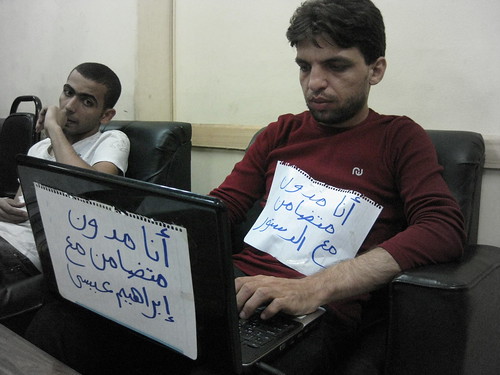
    Bloggers too are protesting in solidarity with Issa (photo by Mahmoud Saber)

    Since Monday, the Al-Dostor staff has been on strike in support of Issa and in protest against Badawi and Edward’s decision. In a statement issued by the Al-Dostor staff, the journalists declared their outrage and disbelief at what they claim is “an indication of a new form of repression that aims to resume the ridiculous play surrounding Gamal Mubarak’s takeover from his father.”

    The journalists accused the new owners of Al-Dostor of harnessing a plan determined long before their purchase of the newspaper to eliminate Issa and liquidate the newspaper and its legacy as a beacon of free expression, a role model and a spearhead in the fight against corruption.

    In return, protesting journalists faced abuse and insults by an outraged Reda Edward who physically and verbally insulted a number of them before confiscating the newspapers computer from the premises. Edward told the protesting journalists that he is “capable of running Al-Dostor with his feet” if they insisted on Issa.


    After insulting Al-Dostor journalists, Edward confiscated their computers

    This episode is perhaps more dramatic than many of us had imagined, but falls in line with the general expectations many of us had. The Wafd, an opposition party whose aspirations for a share in power supersedes its commitment to reform would naturally mark the end of a confrontational journalistic experience as that of Al-Dostor and Isaa.

    In other words, the Wafd did what Mubarak couldn’t do through traditional means of repression. Taking Issa to court and trying him according to laws criticised as infringing on the right to free expression and in violation of international conventions on civic and political rights created an out roar amongst a national and international civil society that has become experienced in escalating cases and abuses as these.

    Instead, the Wafd guaranteed a safer and less costly means to liquidate Al-Dostor and Issa: buying the newspaper, entering into a confrontation with Issa and liquidating the entire experience. Badawy seems to be an experienced politician when it comes to intra-partisan and intra-oppositional schisms: he played a major role in the schism between ousted chairman Nu`man Goma`a and Mahmoud Abaza in 2006 before defeating and succeeding the latter in May 2010.

    Whether or not Al-Dostor will ever recover: only time will tell. And whether or not Ibrahim Issa can re-emerge: again, only time will tell.

    "Starting today, there is no Dostor (meaning constitution)... I am the Constitution"

    From the protests at the Al-Dostor offices (photo by Mahmoud Saber)

    But this new tactic in the liquidation of opposition is alarming, especially with the Wafd’s recent cooptation of some prominent opposition figures like veteran sociologist, pro-democracy advocate and director of the Ibn Khaldun Centre for Development Studies, Sa`ad El-Din Ibrahim and iconic vernacular poet Ahmad Fouad Negm.

    Speaking of which, the Wafd took many by surprise when Negm’s membership of the Wafd was announced. The non-partisan, ultra-leftist, revolutionary poet who spent a big share of his career in the prisons of Egypt’s various presidents is a folk hero for Egypt’s underclass and their likes throughout the Arab world.

    Negm continues to write his poetry to date. After being sung by his lifetime companion Sheikh Imam, Negm’s poems in vernacular Egyptian are popular amongst the Arab left and continue to be sung by a number of young singers. including the Tunisian Latifa and the Lebanese singer of Palestinian origins Ziyad Sahab.

    Anyhow, back to Issa before I wrap up though. In his last editorial published on Monday 4 October, Issa wrote a piece in which he compared Ahmad Zuweil and Mohammed El-Baradei as examples of an intellectual Egyptian “crust” and an Egyptian elite that is ignorant and proud of its ignorance. The piece is the last Issa wrote since the crisis erupted, and might be last he’ll ever write for Al-Dotsor – at least until (if) the crisis is resolved.

    Egypt’s rich elite which is divided between a pro-Gamal Mubarak and pro-NDP business class, a pro-Muslim Brotherhood mercantile class, a pro-Wafd clique of wannabe NDP businessmen who aren’t making it to Gamal Mubarak’s hall of fame, and an indifferent majority.

    Does this mean the ruling party has indeed bought up the Wafd, then Al-Dostor before co-opting the Muslim Brotherhood and overtaking the opposition in its entirety as one opinion suggested some two months ago?

    I just wonder: who will buy Al-Masry Al-Youm and liquidate it? Who will buy the Egyptian blogosphere and censor it? Who will partake in the undoing of Egypt’s recent reform movement? Will co-opting Negm into the mean the poet's legacy as the artistic and revolutionary mouthpiece of the Egyptian underclass be a legacy of the past? Who will be co-opted next? Is this the end of independent opinion in traditional media? Will every Ibrahim Issa opt to blog and enagge in citizen journalism instead?

    Too many things to wonder about, and only time will tell.

    Read more...